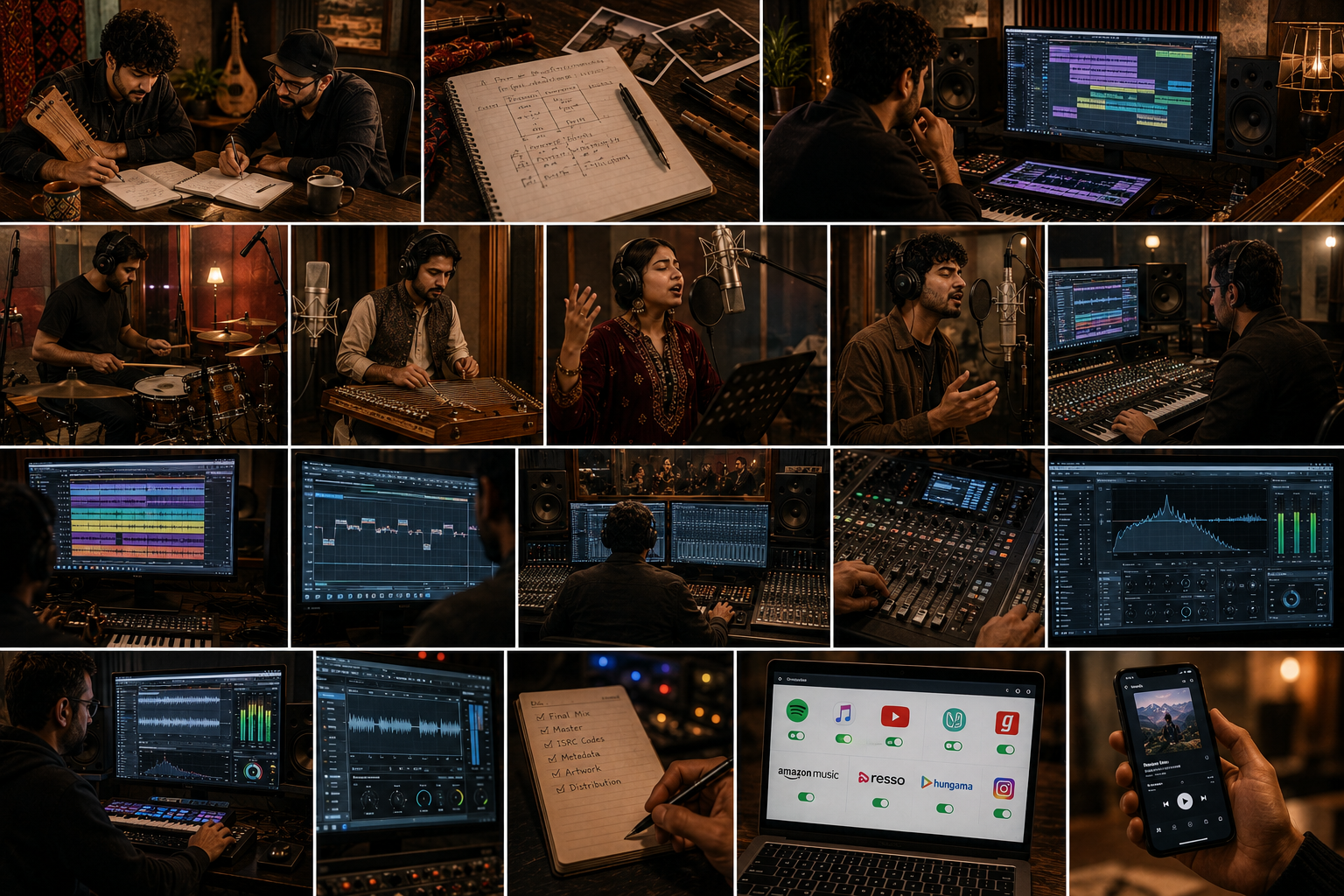
Most people experience music as a finished product — a three-minute song that plays through their earphones, complete and seamless. What they almost never see is the process that produced it: the weeks of preparation, the hours in the studio, the dozens of decisions large and small that shaped every detail of the final recording.
We are pulling back the curtain. This is what actually happens when an artist comes into the YMA Music studio to make a song — from the first conversation to the moment the master file goes out for distribution.
Phase 1: Pre-Production (Before Anyone Enters the Studio)
The most common misconception about music production is that it begins when you walk into the studio. In reality, the most important work happens before any equipment is switched on. Pre-production is where a song is shaped from a rough idea into a clear artistic vision — and the quality of this work determines everything that follows.
The Song Development Conversation
When a new artist comes to YMA Music, the first thing we do is listen — not to recordings, but to the artist themselves. We want to understand their vision for the music, their influences, their cultural relationship to the material, and what they want this music to mean for listeners. This conversation is not small talk; it is the foundation of the entire production.
For regional artists working with Dogri or Kashmiri folk material, this conversation often involves questions about the specific tradition the song draws from, the intended emotional register, and how much contemporary production the artist wants layered over the traditional elements. Getting this balance right is the central creative challenge of regional music production.
Arrangement Planning
Before entering the studio, we create a rough arrangement plan for the song. Which instruments will appear in the track? What is the song's structure — verse, chorus, bridge? Where will the emotional peak be? What production elements will distinguish this track sonically?
For songs that incorporate traditional instruments — santoor, rabab, tumbaknari, or algoza — we also schedule those sessions separately, often recording acoustic folk instruments first and building the production around them rather than the other way around. This ensures the traditional elements feel central rather than added on top.
Demo Recording
Most songs go through a demo phase before the final recording session. The artist records a rough version — often just voice and a simple accompaniment — that allows everyone to hear the song clearly and make arrangement decisions before committing to expensive studio time. This is also the point where lyrics are finalised and vocal melodies refined.
Phase 2: Tracking (The Recording Sessions)
Tracking is the process of recording all the individual elements of a song — vocals, instruments, and any additional layers. In a typical production session at YMA Music, this happens in a carefully planned sequence.
Bed Tracks First
We generally start with the rhythmic and harmonic foundation of the track — what producers call "bed tracks." For contemporary productions, this often means programming or recording drums and bass first, establishing the groove and tempo that everything else will sit on top of. For folk-influenced work, this might mean recording the primary melodic instrument first and building the rhythm around it.
The tempo is established using a click track — a metronome that all musicians play to. This ensures that every element recorded across multiple sessions will align perfectly when the tracks are assembled.
Instrument Recording
Live instruments are recorded in isolation booths when possible, to prevent sound from bleeding between microphones. A traditional instrument like the santoor requires extremely careful microphone placement — often using multiple microphones at different distances to capture both the attack of the hammers on the strings and the resonance of the wooden body.
This is where the acoustic character of YMA's studio makes a significant difference. The room itself shapes the sound that microphones capture. A studio with poor acoustic treatment will imprint its own character on every recording made within it — and that character is difficult or impossible to remove in the mixing stage.
Vocal Recording
Vocals are typically recorded last in the sequence, after the musical bed is fully established. Recording vocals last allows the singer to hear the complete musical context they are performing in, which helps both tuning and emotional delivery.
A typical vocal session for a professional production involves multiple complete takes of the full song, followed by a detailed review process where the producer and artist together identify the best version of each section — the best take of the verse, the best take of the chorus, and so on. These are then assembled into a composite performance called a "comp."
Regional vocal traditions often involve ornamentation — specific melodic flourishes that are part of the folk tradition — that requires particular care in both performance and recording. Capturing these ornaments cleanly, without them being obscured by production elements, requires both technical skill and cultural understanding from the engineer.
"The studio should be a space where an artist feels safe enough to be completely honest. The best performances happen when the technical environment disappears and all that is left is the music."
Phase 3: Editing
Once all the tracks have been recorded, the editing phase begins. This is the least glamorous part of the process but one of the most technically demanding.
Editing involves several tasks:
- Comping vocals and instruments: Assembling the best moments from multiple takes into a single composite performance
- Timing correction: Adjusting the placement of notes and beats to ensure everything aligns with the groove (within the musical context — over-correction creates a mechanical, lifeless sound)
- Pitch correction: Where necessary, adjusting individual notes to ensure accurate tuning while preserving the natural character of the voice
- Noise removal: Cleaning up room noise, equipment hum, and other unwanted sounds that microphones captured alongside the music
- Arrangement editing: Sometimes, decisions are made in the editing phase to restructure the song — shortening sections, adjusting the timing of entries, or removing elements that are not working
Phase 4: Mixing
Mixing is the process of combining all the recorded tracks into a single stereo file — the version that listeners will eventually hear. It is also where the sonic character of the production is fully realised.
A mix engineer balances the relative levels of all the elements, applies equalisation to shape the tonal character of each sound, uses compression to control dynamics, adds reverb and delay to create a sense of space, and makes hundreds of detailed decisions about how each element relates to every other element in the production.
For regional music specifically, mixing requires particular care around the acoustic instruments. A santoor, for example, has a frequency range that can conflict with synthesised elements common in contemporary production. The art is in creating a mix where both the traditional and the contemporary elements feel at home — neither compromised by the presence of the other.
A typical mix for a YMA Music production goes through several revision rounds. The artist hears the first mix, provides feedback, and revisions are made until both the artist and the production team are satisfied. This iterative process can take several sessions, and the number of revisions required is not a sign of failure — it is the process working as it should.
Phase 5: Mastering
Mastering is the final step before a track is released. A mastering engineer takes the finished mix and optimises it for playback across all the different contexts where listeners will hear it — streaming platforms, radio, television, earphones, speakers, car stereos.
This involves final equalisation, gentle compression to ensure consistent loudness, and ensuring that the track meets the loudness standards required by streaming platforms. Mastering also involves creating the various formats required for different distribution channels — high-resolution files for digital distribution, MP3 files for certain submission platforms, and so on.
Phase 6: Release and Distribution
A fully produced and mastered track still needs to be distributed and promoted to reach its intended audience. Distribution through YMA Music covers all major streaming platforms — Spotify, Apple Music, JioSaavn, Gaana, YouTube Music, and others — as well as the submission process for editorial playlist consideration.
The production process does not end at the master file. It continues through the creation of the release artwork, the writing of the track metadata (which affects how the song is categorised and recommended by streaming algorithms), the pitching of the track to playlist curators and media, and the coordination of the social media campaign around the release.
From first conversation to streaming release, a typical YMA Music production takes four to eight weeks. Every hour of that time is invested in producing music that can represent both the artist and the cultural tradition they carry — with the quality and care that both deserve.