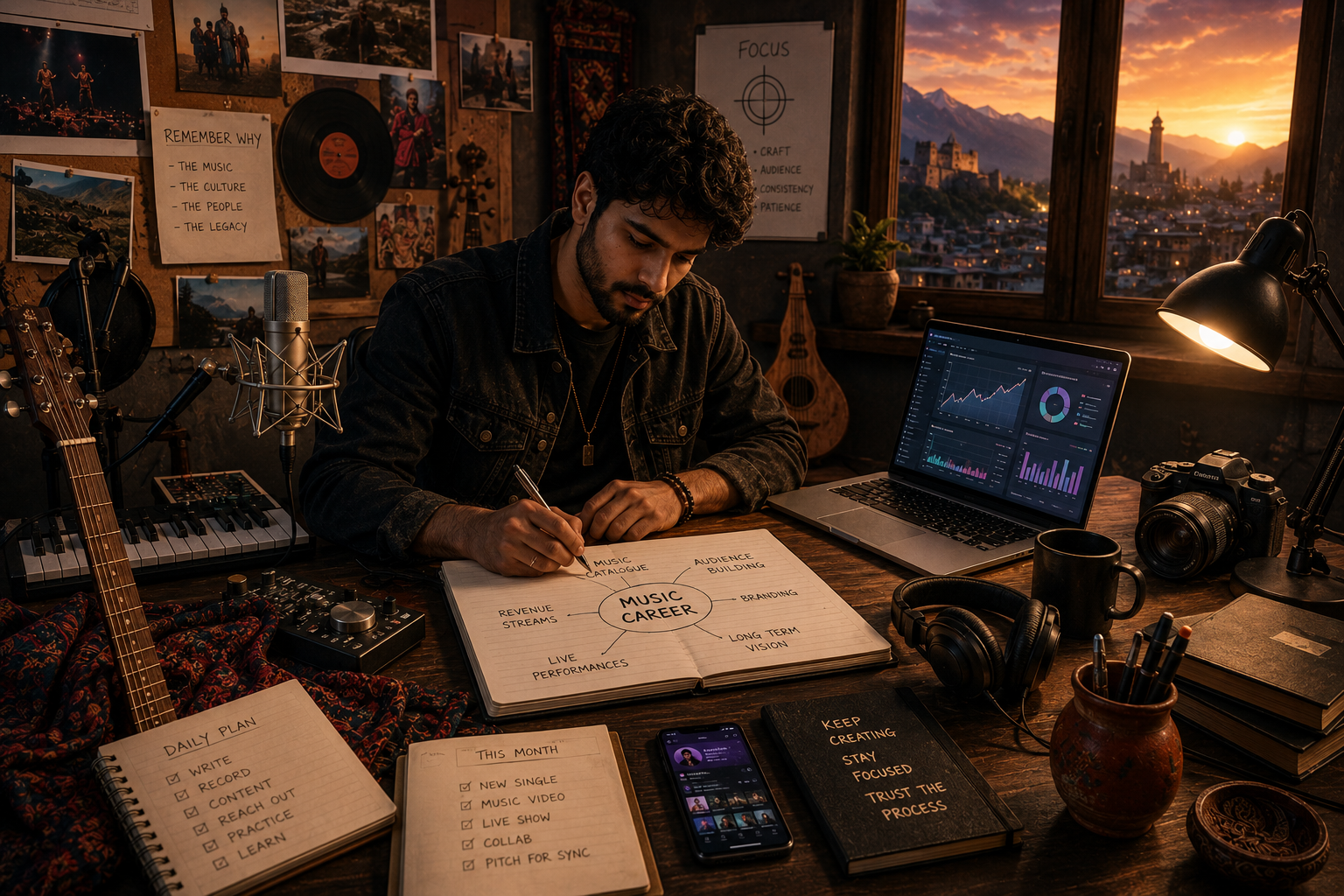
The music industry has changed completely. A decade ago, the path to a sustainable music career was clearly defined: make a demo, send it to labels, get signed, release through major distribution, hope for radio. If none of that worked, your career was effectively over before it began.
That world no longer exists. Today, an independent artist in Jammu has access to the same global distribution platforms as a major label artist in Mumbai. The same streaming algorithms, the same social media discovery tools, the same audience. What was a bottleneck — label access — is now an option rather than a requirement. The opportunity is real, and it is larger than at any point in music history.
The challenge is that opportunity without strategy rarely converts into a career. This article is about building that strategy.
Redefining What "Career" Means
Before anything else, get clear on what you actually want. "A music career" means radically different things to different people. For some, it means full-time income from music alone. For others, it means a significant side income that funds a lifestyle built around creating. For others still, it means building a legacy — a body of work that matters culturally, regardless of commercial performance.
None of these is more valid than the others, but they require different strategies, different timelines, and different measures of success. An artist chasing full-time income needs to prioritise revenue streams from day one. An artist building a cultural legacy can afford to invest more time in the work itself and less in monetisation.
Know which path you are on. The confusion that derails most independent artists comes from mixing up these different goals — grinding for streams when what they actually want is artistic respect, or chasing critical attention when what they actually need is income.
The Foundation: Your Catalogue
Everything else in your career is built on your music. This seems obvious, but it is frequently forgotten in the scramble for views, followers, and features. The artists with the most durable careers are those who have invested the most seriously in developing their craft and building a coherent, high-quality catalogue.
What does a strong catalogue look like?
- Consistent quality. Every release should represent your best work at that point in time. A catalogue with a few great songs and many mediocre ones creates a confusing impression.
- Sonic coherence. Listeners should be able to listen to five of your songs and understand what kind of artist you are. This does not mean all your songs must sound the same — it means they should all feel like they come from the same creative mind.
- Regular releases. Streaming algorithms reward artists who release consistently. The industry standard for independent artists who want to maintain algorithmic momentum is roughly one release every four to six weeks, though quality should never be sacrificed for frequency.
Revenue Streams: Thinking Beyond Streaming
Streaming royalties alone will not build a sustainable career for most independent artists. The per-stream rates on major platforms remain extremely low, and building the kind of stream volume that generates significant income takes years. The artists who make music their primary income have typically diversified across multiple revenue streams.
Live Performance
For regional artists, live performance remains the most reliable and highest-margin revenue source. A well-produced live show builds audience loyalty in ways that streaming simply cannot replicate. Start locally — colleges, cultural events, wedding seasons, festivals — and build outward from there. Every live show should be treated as a marketing event as much as a revenue event.
Sync Licensing
Music licensing for films, advertisements, web series, and documentary content is an underutilised revenue stream for most independent artists. The demand for authentic regional music in content production has grown significantly, especially for OTT platform productions that are actively seeking to represent the diversity of Indian culture. Registering your music with a performance rights organisation and actively pitching to music supervisors is worth the effort.
Brand Collaborations
As your audience grows, brands will become interested in associating with you. These collaborations — social media posts, event appearances, content creation — can generate significant income. Be selective about the brands you work with, and ensure any collaboration is authentic enough that it does not damage your artistic credibility.
Teaching and Workshops
Your expertise as a musician — whether in folk traditions, production techniques, or vocal performance — has value to others who want to learn. Teaching, either one-on-one or through group workshops, is a stable income stream that also builds community and deepens your relationship with your audience.
Building an Audience the Right Way
Audience building is a long game. The artists who build the most loyal and engaged followings are not necessarily the ones with the cleverest marketing — they are the ones who show up consistently, share authentically, and create genuine value for the people who follow them.
Focus on Depth Over Breadth
A thousand deeply engaged fans are worth more — commercially and culturally — than a hundred thousand passive followers. Depth of connection drives ticket sales, merchandise purchases, and word-of-mouth recommendation. Breadth of numbers drives vanity metrics. Prioritise building real relationships with your audience, not just accumulating followers.
Email and Direct Communication
Social media algorithms are unpredictable. An account with 50,000 followers might reach fewer than 2,000 of them with any given post. An email list of 2,000 subscribers reaches all 2,000 every time you send something. Building a direct communication channel with your most engaged fans — whether through email or WhatsApp broadcasts — is one of the most underrated strategies in independent music marketing.
"The goal is not to have the most followers. The goal is to have the right followers — people who will actually show up, buy tickets, and tell their friends about you."
When to Consider Working With a Label
The rise of the independent artist does not mean labels have become irrelevant. What has changed is the power dynamic. In the old model, artists needed labels to access distribution, production resources, and promotional infrastructure. In the current model, those things are available independently — which means an artist who partners with a label should be doing so because the label offers genuine value, not because there is no alternative.
The right label partnership for a regional artist looks like this: a label that understands your specific market, has relationships with the platforms and curators that matter for your genre, has resources for professional production and promotion, and treats your artistic identity as an asset rather than something to be diluted.
That is what we try to be at YMA Music. We work with artists who have a genuine vision and want the infrastructure to realise it — not artists who want someone else to make all the decisions.
The Long View
Building a music career is a ten-year project, not a two-year one. The artists who endure are those who love the work enough to keep doing it even when the results are slow, who keep learning and evolving, and who treat every experience — success and failure alike — as useful information.
The Indian regional music landscape is at an inflection point. The infrastructure, the audience appetite, and the cultural momentum are all aligned. The artists who put in the work right now — building their craft, their catalogue, their audience, and their business — are positioning themselves for careers that will matter for a long time.